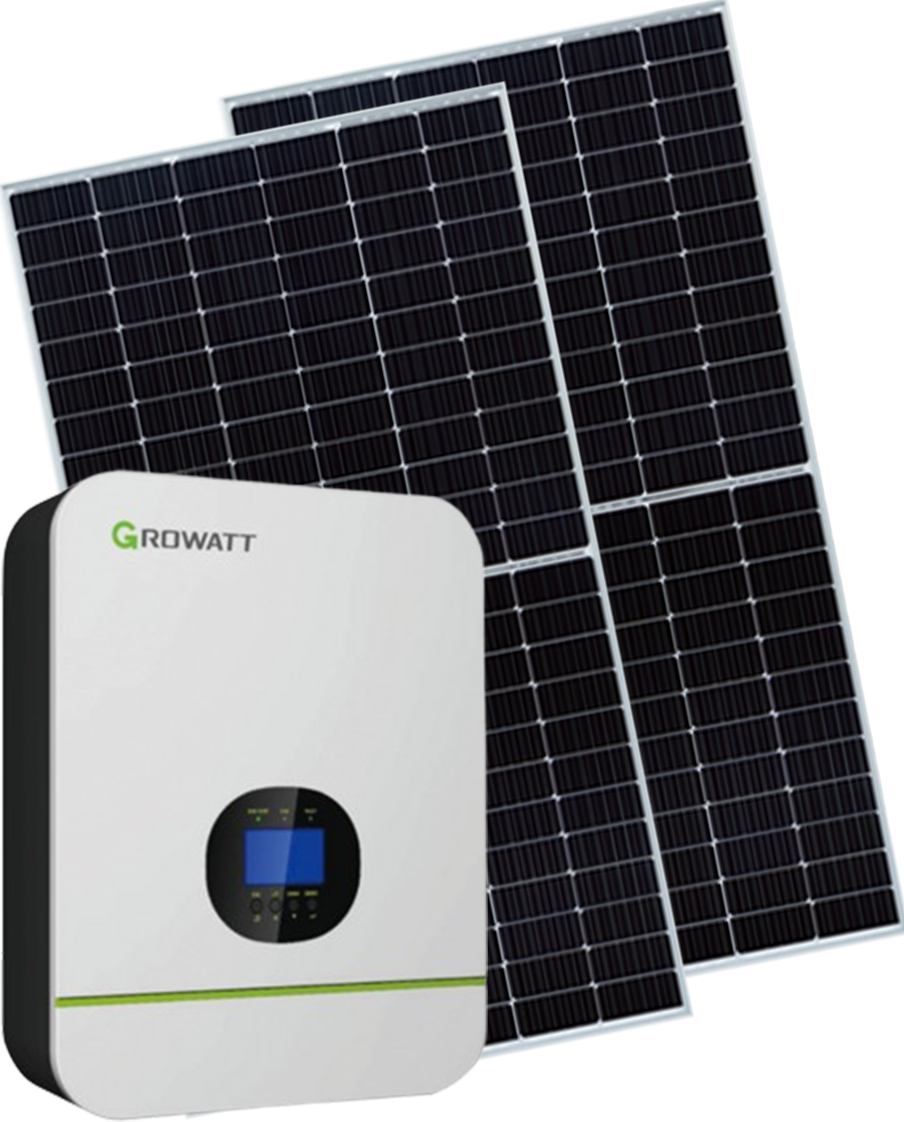
Bifacial solar panels are systems that capture sunlight from both the front and the back of the panel. Solar cells on both sides of the panel convert this light into electricity, maximizing solar energy production by also capturing light reflected from the ground or other surrounding surfaces.
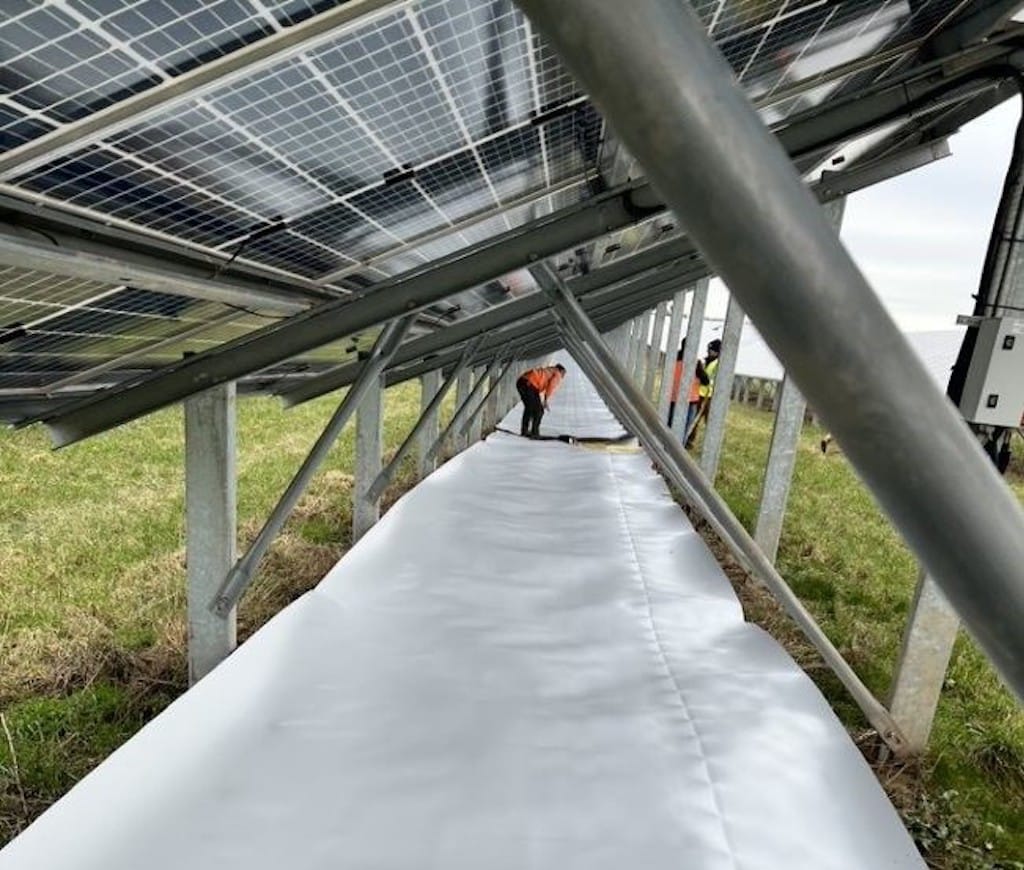
German company Solar Kapital has recently investigated how to further improve the efficiency of these bifacial solar panels by using a transparent membrane. These geotextiles have the peculiarity of better reflecting light to the underside of the panels, as well as diffusing it more evenly.
The results of the company’s tests have been promising, particularly because the payback period for this technique is relatively short.
During this period, an average increase in production of 6.4% was observed. Thus, the average efficiency reached 1,720 kWh per kilowatt, a remarkable figure considering the conditions in the region, according to Solar Kapital.
A similar experience was also carried out in another park for a shorter period of 2 months, with a 200 m2 coverage area under panels mounted on two-axis trackers. On this occasion, efficiency increased by 2.5%.
For the two farms, the company estimates a payback time of less than 2.5 years and less than one year, respectively.
However, several factors must be taken into account that can influence the profitability of using these white membranes, such as the nature of the subsoil, the variable costs related to the production of electricity and the savings realized thanks to the reduction in the need to mow the grass and the various weeds that may grow. Degradation of the geotextile must also be taken into account.
A technique on the rise.
Importantly, the use of white floor coverings has already proven its effectiveness elsewhere.
Another German company, Solmax, a world leader in geotextiles, offers a white reflective membrane that promises an efficiency increase of between 5 and 20%, depending on the configuration of the PV plant.
In some desert regions, it is even proposed to paint the concrete cladding on which the solar panels are installed white, in order to maximize their reflective power.
(Taken from the site https://ecoinventos.com/clave-para-aumentar-produccion-paneles-solares-bifaciales-suelo-blanco/)